
Cookie Preferences

By clicking, you agree to store cookies on your device to enhance navigation, analyze usage, and support marketing. More Info
Thank you! Your submission has been received!
Oops! Something went wrong while submitting the form.


March 25, 2022

Since 1989, South Korea has had a single-payer healthcare insurance system, the Korean National Health Insurance Service. This facilitates nationwide population studies.
A South Korean study team used the national health claims database to retroactively examine the relationship between birth weight and subsequent diagnosis of ADHD for all 2.36 million children born in the country between 2008 and 2012. After excluding children who had since died, who had missing birth weight records, missing income information, or who weighed under400 grams at birth, 2,143,652 children remained in the study cohort.
Gestational age at birth was not available, so could not be taken into consideration.
To reduce the impact of confounding factors, odds ratios were adjusted for sex, history of congenital or perinatal diseases, income, and birth year.
Children with more normal birth weights in the range of 2.5 to 4 kilograms were used as the reference group.
Children with birth weights greater than this reference group were found to be no more likely to develop ADHD than those in the reference group.
At the other end of the spectrum, children with birth weights under a kilogram were 2.2 times more likely to be diagnosed with ADHD than those in the reference group.
That dropped to 1.7 times more likely for those with birth weights from 1 to 1.5 kilograms; 1.5 times more likely in the 1.5-to-2-kilogram range, and 1.4 times more likely in the 2-to-2.5-kilogram range. This dose-response curve, accelerating steeply with lower birth weights, points to a strong association.
For autism spectrum disorder (ASD), the association was even stronger. Again, there was no significant association with higher-than-normal birth weight. But children in the 2-to-2.5-kilogram range were 1.9 times as likely to be diagnosed with ASD; those in the 1.5-to-2 kilogram tranche over three times as likely; those in the 1 to 1.5-kilogram tranche five and halftime as likely, and those under 1 kilogram over ten times as likely.
The authors concluded, "In this national cohort, infants with birth weights of < 2.5 kg were associated with ADHD and ASD, regardless of perinatal history. Children born with LBW [low birth weight] need detailed clinical follow-up."
In Gyu Song, Han-Suk Kim, Yoon-Minho, You-na Lim, Duk-Soo Moon, Seung Han Shin, Ee-Kyung Kim, Joonsik Park, Jeong Eun Shin, Jungho Han, and Ho SeonEun, "Association between birth weight and neurodevelopmental disorders assessed using the Korean National HealthInsurance Service claims data," Scientific Reports (2022)12:2080, published online, https://doi.org/10.1038/s41598-022-06094-x.


The Background:
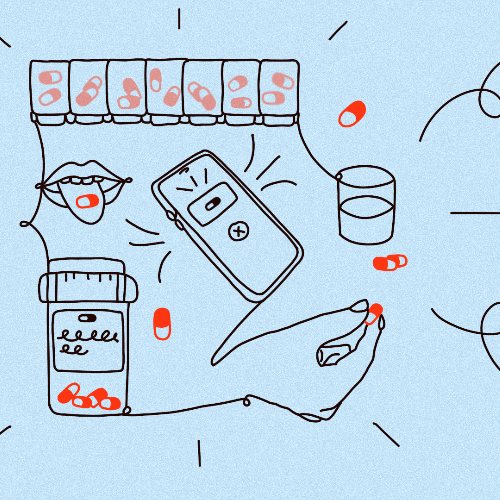
Management of ADHD relies on both medications and non-medication approaches. Clinical guidelines often recommend medication as the first-line treatment for adults, while non-medication interventions are often preferred for children. Medicines fall into two main groups: stimulants (for example, methylphenidate and amphetamines), which have strong and well-established evidence and are generally considered first choice, and non-stimulants (such as atomoxetine), which are typically used when stimulants are contraindicated, not tolerated, or ineffective.
How many people with ADHD receive medication is an important indicator of care quality and can be tracked at the national level. Untreated ADHD can affect many areas of life, from physical health, to school and work performance, to relationships emotional well-being. ADHD is associated with poorer quality of life, higher risk of accidents, substance use issues, criminal behavior, educational underachievement, and even increased premature mortality. The condition also places a substantial burden on families and caregivers, so understanding treatment rates matters for individuals and society.
Most epidemiological research has measured how common diagnosed ADHD is, but the share of those diagnosed who actually receive medication can vary a lot. That variation reflects differences in how ADHD is diagnosed, how easy it is to get treatment, what clinical guidelines recommend, and cultural attitudes toward using medication.
The Study:
This paper presents the first comprehensive meta-analysis to estimate how common pharmacological treatment is among children, adolescents, and adults with clinically confirmed ADHD. The analysis included only register-based population studies where diagnoses were confirmed by a qualified healthcare professional. Twelve studies meeting these criteria from Europe (the UK, Sweden, Denmark), Asia (Taiwan, South Korea), and North America (Canada, the United States) were used. Notably, these are all high-income areas, and thus unrepresentative of populations in lower-income countries.
The pooled estimate showed that about 73 percent of diagnosed individuals in prosperous parts of the world with well-developed health care systems were receiving medication, but there was very high variation between studies.
The Results:
The authors conclude there is substantial global variation in ADHD medication use. Overall, a relatively high proportion of people diagnosed with ADHD are treated with medication, which may reflect improved recognition and access to care. The large differences between studies probably reflect differing health systems, diagnostic rules, treatment definitions, study populations, and reporting practices, and they underline the need for more standardized definitions and reporting to make comparisons more meaningful.
There is also a need for information from lower-income regions, but that is complicated by an absence of register-based population studies in countries with more limited health care access.

The Background:
Because impulsivity is a core feature of ADHD, researchers have suggested it may raise the likelihood that someone will use psychoactive substances (including alcohol) and go on to develop a substance use disorder (SUD). When ADHD and SUD occur together in adolescents, treating one disorder alone usually has little or no positive effect on the other; current guidance therefore recommends treating both conditions at the same time using evidence-based approaches for each.
Given how much ADHD can worsen outcomes for people with primary SUDs, it is important to identify ADHD in people who are being treated for substance problems.
The Study:
A recent systematic meta-review found that, by current official criteria, ADHD affects about 7.2% of children and adolescents and about 2.6% of adults (Chaulagain et al., 2023). When adult ADHD is defined without the requirement that symptoms began by age 11, roughly 6.8% of adults meet criteria. A large body of research links ADHD to higher rates of medical problems, poorer quality of life, greater risk of suicide, more accidental injuries, worse educational outcomes, and increased involvement with the criminal justice system.
The present study is the first meta-analysis to estimate how common clinically diagnosed ADHD is among adults (age 18+) who are in treatment for psychoactive substance use disorders, and to provide those estimates by sex and by the specific substance used.
The authors included only studies of adults treated for a SUD (including alcohol). Eighty-four studies met the criteria, representing more than 34,000 people. Across all studies, the pooled prevalence of clinically diagnosed ADHD was 22%.
To put that in context, 22% is about eight times higher than the 2.6% adult prevalence using the stricter official definition, and about three times higher than the 6.8% rate when the childhood-onset requirement is relaxed. By substance, the prevalence was similar for alcohol (24%) and opioids (22%), with no significant difference between males and females. Prevalence among people treated for cocaine use was somewhat lower overall (18%), driven largely by lower rates among women, for whom the rate was no higher than in the general population. Estimates were higher for people using benzodiazepines and cannabis, but those figures are based on a very small number of users (256 and 249 people, respectively) and are therefore less certain.
The Results:
The authors conclude: “These findings underscore the need for early identification and treatment of ADHD as most substance use disorders develop in adolescence and young adulthood. While in treatment for ADHD, appropriate screening and management of substance use is possible.”

The Background:
Stimulant medications (like methylphenidate and amphetamines) and non-stimulants (like atomoxetine and guanfacine) remain the first-line treatments for ADHD, but their long-term use is often constrained by parental concerns, side effects (reduced appetite, sleep disruption, cardiovascular effects), and the fact that roughly 30% of children respond only partially or not at all. These medications tend to help with attention and behavior, but they do less to address emotional regulation or broader physical health, leaving some parents to seek other safe, complementary treatments.
Nutritional approaches, including omega-3 fatty acids, are one such avenue. Oily fish is the natural source, but clinical trials typically rely on supplements instead, since they allow for precise dosing, avoid the heavy-metal exposure that can come with high fish intake, and sidestep the problem of inconsistent dietary habits. Two omega-3s stand out as particularly relevant: DHA, which supports brain structure and cell-to-cell communication, and EPA, which helps reduce brain inflammation and improve blood flow. Both influence the dopamine and serotonin systems implicated in ADHD.
The Study:
Previous meta-analyses have generally found only modest overall benefits with mixed results. This mixed-results pattern may reflect the fact that children who had low omega-3 levels to begin with stand to benefit more than those whose levels are already adequate. This meta-analysis set out to test that idea directly, asking whether a child's baseline omega-3 status predicts how well they respond to supplementation.
To be included, studies had to be randomized controlled trials (RCTs) involving children diagnosed with ADHD who did not have major coexisting medical conditions. Trials that used broad multinutrient interventions, where the effect of omega-3s specifically couldn't be isolated, were excluded.
The resulting analysis of seven RCTs covering 654 children found small overall improvements in ADHD symptoms with omega-3 supplementation, consistent with earlier meta-analyses. There was little variation across studies, but a clear signal of publication bias, which the authors did not attempt to statistically correct for.
Among four RCTs involving 369 children with low baseline omega-3 levels, supplementation produced a moderate improvement in ADHD symptoms, with consistent results across studies. By contrast, the six RCTs covering 559 children with normal or high baseline omega-3 levels showed no improvement at all, again with consistent results across studies.
The Results:
The authors concluded: this systematic review and meta-analysis offers preliminary evidence that children’s response to long-chain omega-3 supplementation for ADHD may depend on their starting omega-3 nutritional status. Larger effects emerged in the subgroups defined by individual studies as having low baseline levels, while normal, high, or unstratified groups showed little evidence of benefit. In other words, there may be a benefit to children with ADHD taking omega-3 supplements, but only if they are already deficient.
Even still, a sensitivity analysis limited to ADHD symptom-rating scales found only a numerically higher effect in the low-baseline group. This means that these results, though positive, are not considered statistically significant.
The Take-Away:
Given that the evidence rests on just seven trials, that “low baseline” was defined differently across studies (using different biological markers and thresholds), and that several subgroup comparisons were not planned in advance, the authors caution that these findings should be treated as hypothesis-generating rather than conclusive.


